Resources

Education is power.

Opioid resources

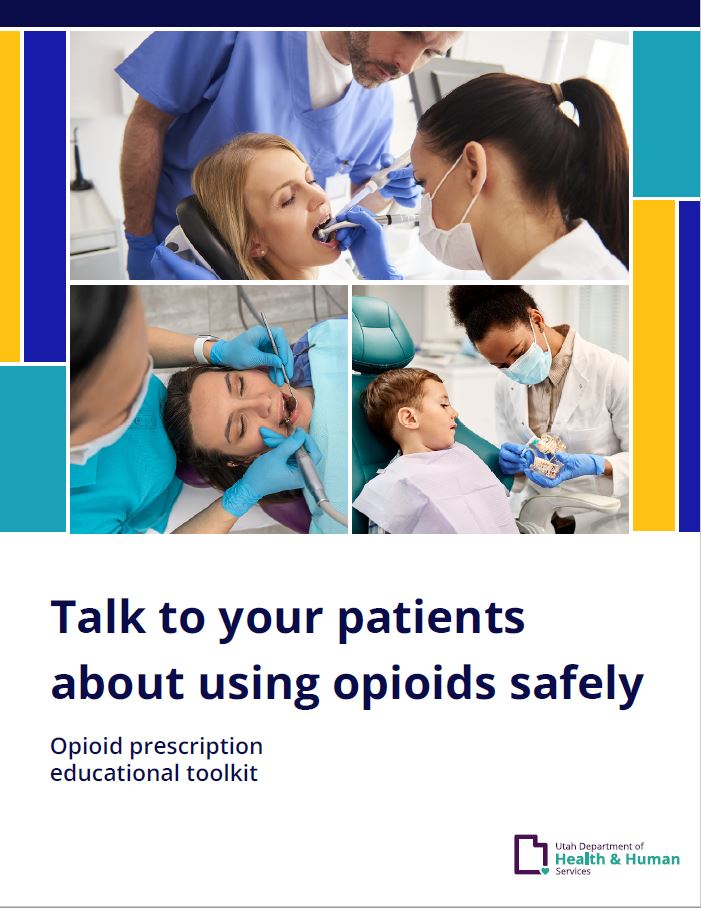
opens in a new tabTalk to Your Patients Dental Toolkit
The following materials were created prior to the merger between the Utah Department of Health (UDOH) and the Utah Department of Human Services (UDHS). These materials are only available upon request

opens in a new tabPrescription opioids: what you need to know
The document provides information on opioid pain medications, their risks, and safe management practices. It also includes resources for substance use disorder treatment and details on how to reverse an overdose using naloxone.

opens in a new tabChecklist for prescribing opioids
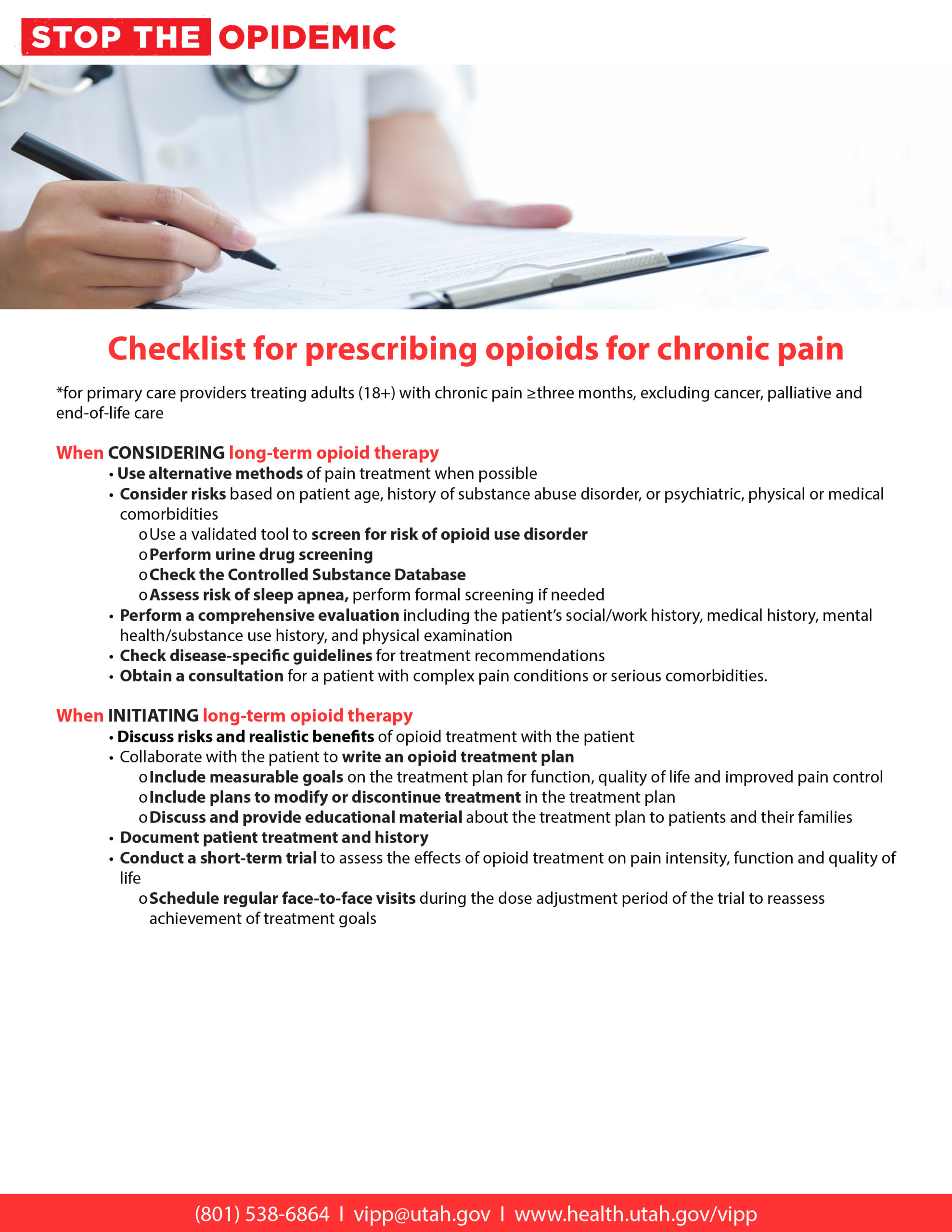
The document provides a checklist for primary care providers when prescribing opioids for chronic pain, covering considerations such as risk assessment, treatment planning, and patient education. It emphasizes safe prescribing practices, monitoring, and guidelines for discontinuing opioid therapy when necessary.

opens in a new tabNon Opioid treatments for chronic pain
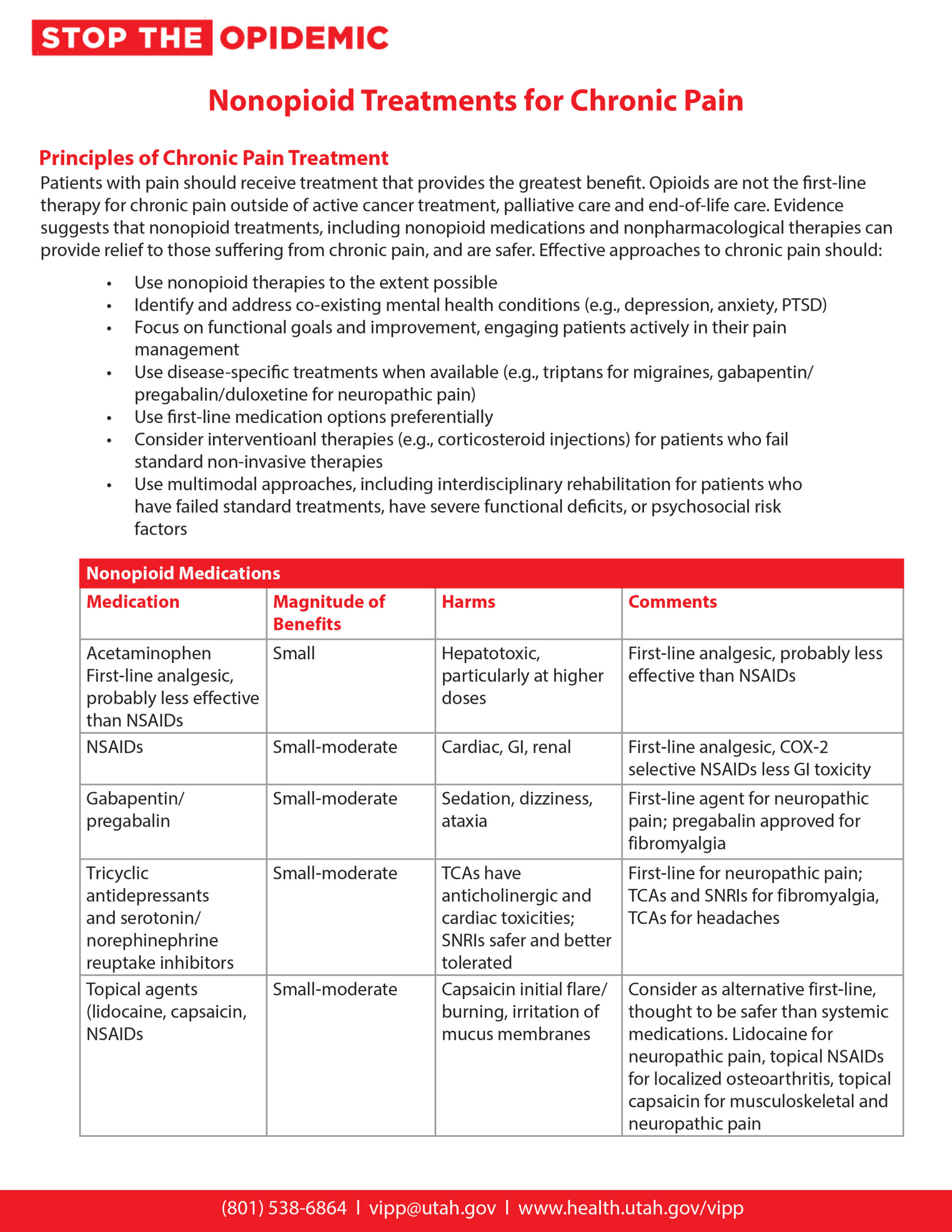
The document outlines non-opioid treatments for chronic pain, emphasizing the use of non-opioid medications and non-pharmacological therapies as first-line treatments. It includes specific recommendations for common chronic pain conditions such as low back pain, migraines, neuropathic pain, osteoarthritis, and fibromyalgia.

opens in a new tabProvider brochure

The document is a toolkit designed to help dental professionals discuss the risks and safe use of prescription opioids with their patients. It includes information on Utah laws, the use of the Controlled Substance Database, and best practices for prescribing and managing opioids in dental care.

opens in a new tabAlcohol screening and brief intervention
The document emphasizes the importance of alcohol screening and brief intervention (ASBI) before prescribing opioids to reduce the risk of overdose. It outlines ASBI methods, discusses their effectiveness, and provides guidelines for healthcare providers to incorporate this practice into patient care.

opens in a new tabAssessing benefits and harms of opioid therapy
The document addresses the opioid epidemic, emphasizing the need for careful assessment of the benefits and harms of opioid therapy. It provides guidance on evaluating patient improvement, risk factors, and steps for tapering or discontinuing opioid use when necessary.

opens in a new tabCalculating safer daily dose of opioids
The document discusses the importance of calculating the total daily dose of opioids in morphine milligram equivalents (MME) to identify patients at higher risk of overdose. It provides guidelines on how to calculate MME and emphasizes caution when prescribing doses above 50 MME/day.

opens in a new tabControlled substances laws and rules
The document summarizes Utah's controlled substances laws and rules, including guidelines for prescribing opioids, restrictions on quantities, and the use of the Controlled Substance Database (CSD). It also outlines requirements for healthcare providers, such as mandatory education on controlled substances and registration with the CSD.

opens in a new tabPocket guide to tapering
The document provides guidelines for tapering opioids for chronic pain, recommending a gradual decrease in dosage tailored to the patient's response. It emphasizes support, consultation with specialists, and using non-opioid therapies to manage pain during the tapering process.

opens in a new tabStop the opidemic brochure
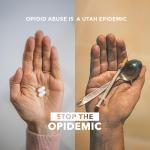
The document highlights the dangers of opioids, explaining their addictive nature and the risks of dependency, overdose, and abuse. It also provides tips on safe opioid use, disposal, and the importance of naloxone for reversing overdoses.

opens in a new tabSummary of recommendations for prescribing opioids
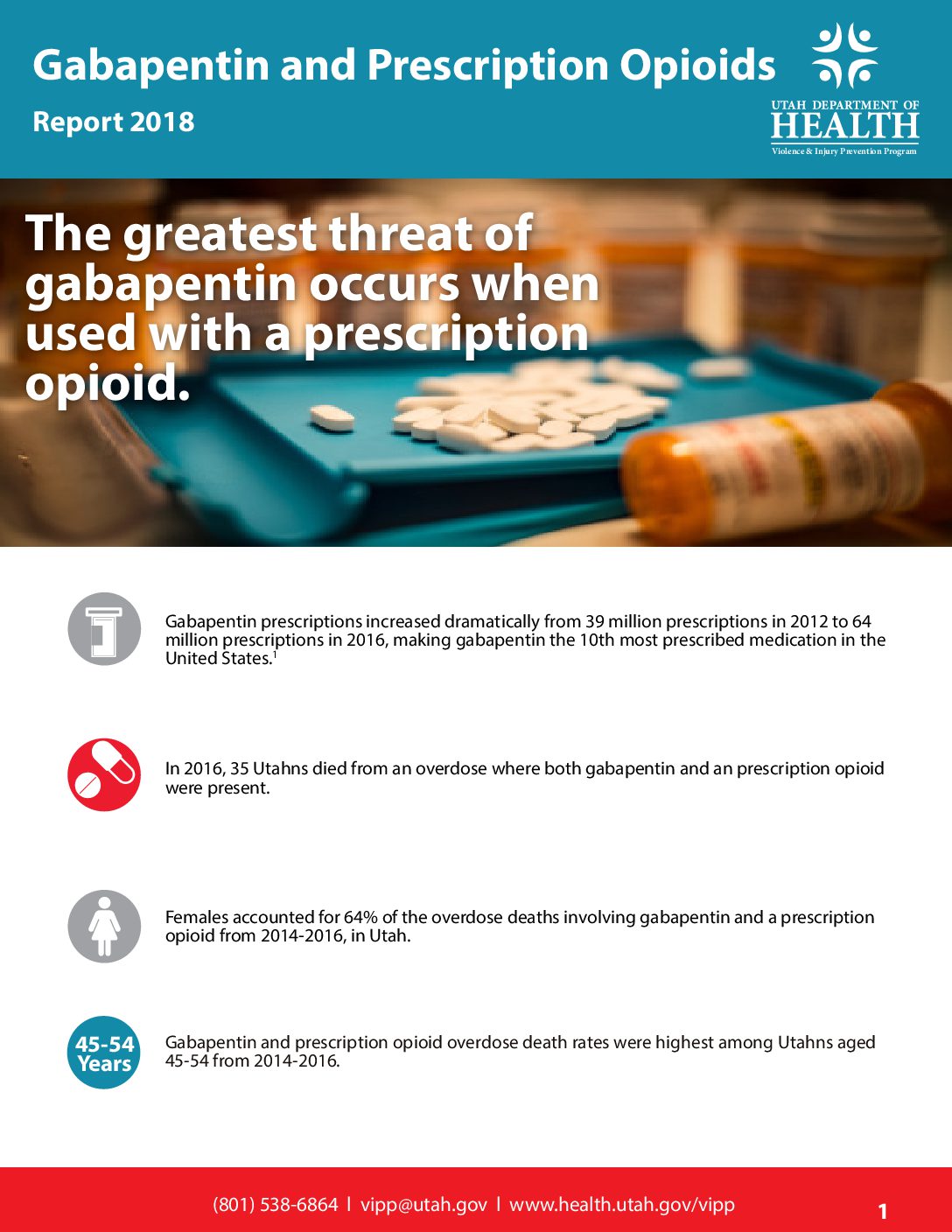
The document provides a summary of recommendations for prescribing opioids, emphasizing the careful use of opioids for both acute and chronic pain. It outlines guidelines for assessing patient risk, creating treatment plans, monitoring therapy, and safely discontinuing opioid use when necessary.

opens in a new tabGabapentin report 2018
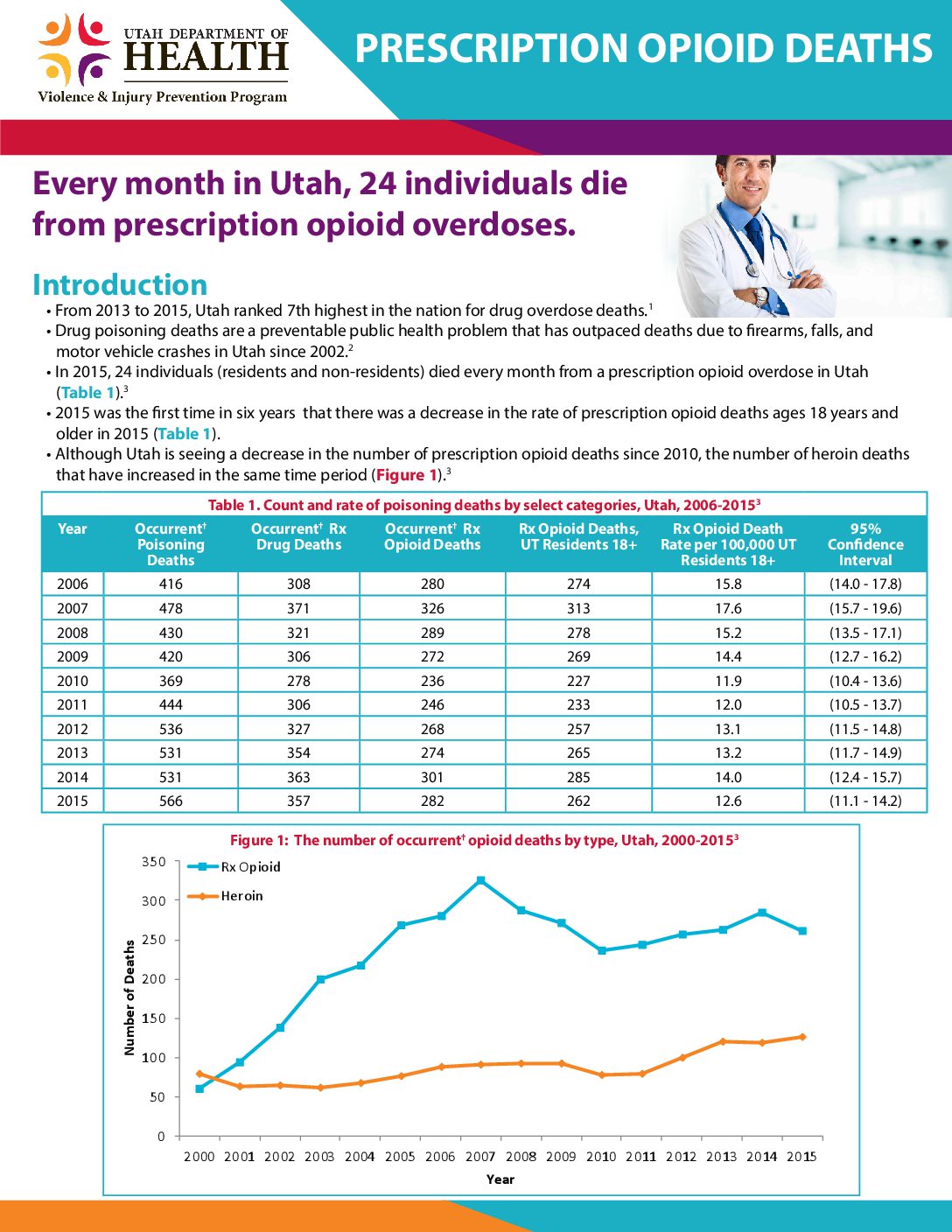
The document reports on the increased use and potential misuse of gabapentin, especially when combined with opioids, highlighting an increased risk of overdose. It provides statistics on overdose deaths in Utah and offers recommendations for healthcare providers, public education, and policy changes to mitigate this risk.

opens in a new tabPrescription opioid deaths 2018
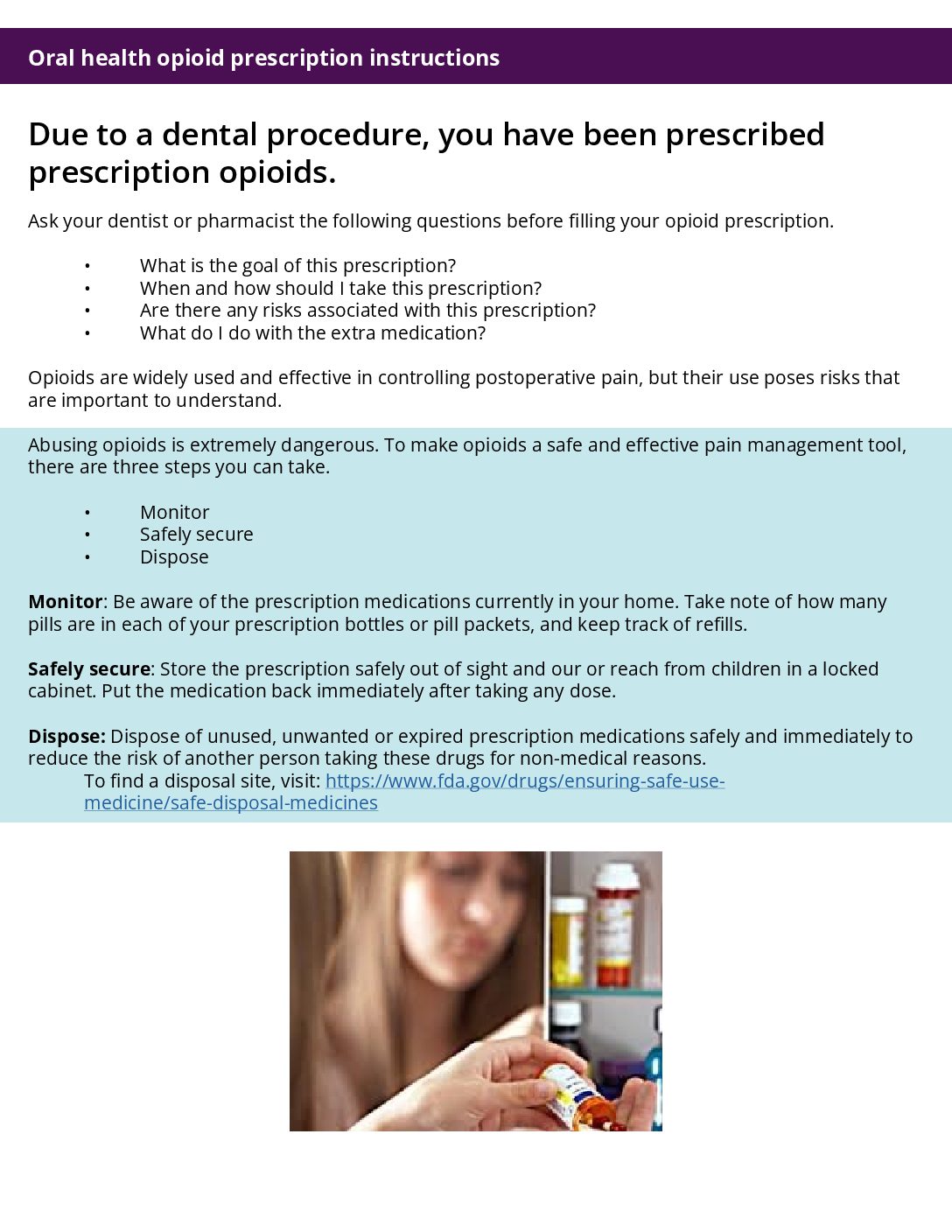
The document highlights prescription opioid deaths in Utah, noting that 24 individuals die each month from overdoses. It presents data on trends, risk factors, and demographics while also providing prevention tips, including safe storage, disposal of medications, and the use of naloxone.

opens in a new tabOral health opioid prescription instructions
The document provides instructions for patients prescribed opioids after a dental procedure, emphasizing the importance of monitoring, securing, and disposing of the medication safely. It encourages patients to ask their dentist or pharmacist about the prescription's goal, usage, associated risks, and proper disposal of leftover medication.

opens in a new tabTalk to your patient dental toolkit

The document provides instructions for patients prescribed opioids after a dental procedure, emphasizing the importance of monitoring, securing, and disposing of the medication safely. It encourages patients to ask their dentist or pharmacist about the prescription's goal, usage, associated risks, and proper disposal of leftover medication.

Fentanyl test strip resources

Image
If you choose to use poster (portrait)
Image

One of these is deadly poster

Image
Detect a deadly dose poster
Image

Not so street smart poster

Image
If you choose to use poster (landscape)

Naloxone resources

Image

Naloxone pocketcard

The following materials were created prior to the merger between the Utah Department of Health (UDOH) and the Utah Department of Human Services (UDHS). These materials are only available upon request
Image

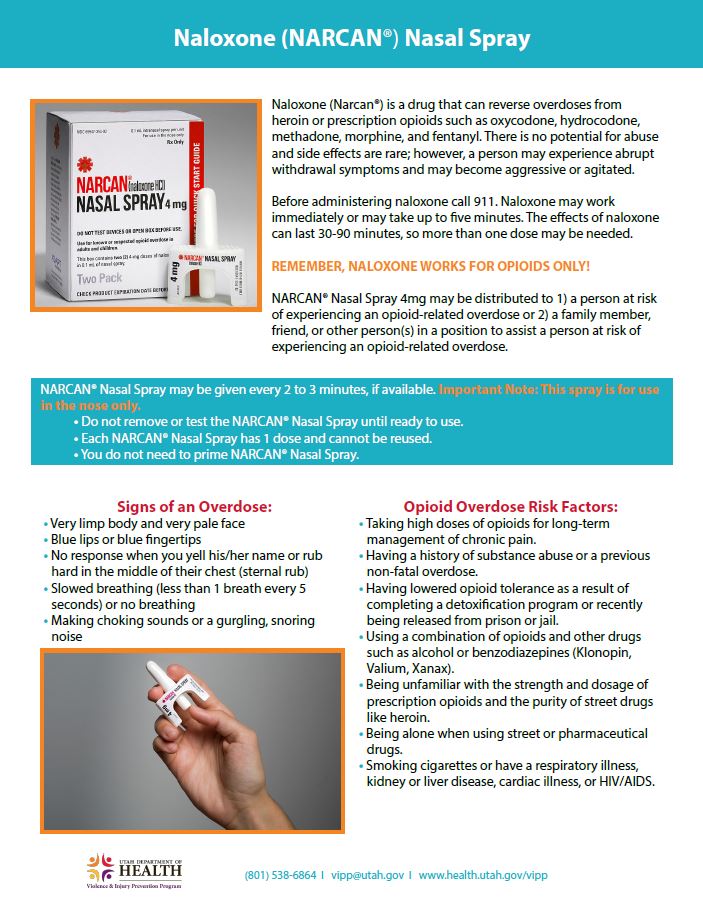
Naloxone written instructions

The document provides instructions on how to recognize an opioid overdose and administer naloxone (NARCAN®) nasal spray. It outlines the signs of an overdose, risk factors, and step-by-step guidance for emergency response, including calling 911, performing rescue breathing, and using the nasal spray.

NARCAN® nasal spray

Naloxone kit with nasal atomizer

Intramuscular injectable naloxone

Poison Safety with Spike AAPCC

Poison Help HRSA

Responding to an Opioid Overdose: Practice Rescue Breathing - Opioid Overdose Education

Naloxona inyectable intramuscular (Spanish) 

Aerosal nasal NARCAN® (Spanish) 

Esté listo para ayudar en caso de una sobredosis de opioides (Spanish) 

Syringe service program resources

Image
Syringe service program contact card
Image
Syringe service program information and locations card